Blog
Scaling Marketplace Category Pages Without Duplicate Content
Table of contents
Marketplace category pages scale safely when you give every URL a clear intent and a unique value that is visible to both users and crawlers. Duplicate content usually happens when filters, pagination, “sort by” options, and thin templated intros produce hundreds of pages that look identical to search engines. The fix is not “write more text,” but to design a system where each indexable category page has a distinct job, distinct signals, and a predictable quality gate.
- Separate intents before you ship more URLs.
- Decide which facets are indexable vs non-indexable.
- Build repeatable “unique modules” instead of repeating intros.
- Use canonicalization to consolidate variants you don’t want indexed.
- Monitor duplicates as a regression test, not a one-time cleanup.
The scalable category page blueprint
Start by defining what “a category page” means in your marketplace SEO (Search Engine Optimization – improving visibility in organic search) model. If you don’t decide which URLs deserve to rank, your platform will decide for you, and it will usually generate index bloat. A simple way to keep the system coherent is to align category pages with a broader Content Marketing Strategy that treats each indexable URL as a planned asset, not an accidental byproduct.
Use this blueprint as your default definition of “indexable category page.” It is intentionally opinionated, because vague rules create duplicate clusters at scale. Treat it as a checklist you can hand to product, engineering, and content.
- Define a primary intent per category (browse, compare, learn, or find deals) and keep it stable.
- Choose 1 “root” URL per category as the canonical target for indexing and internal links.
- List all URL variants (filters, sorts, pagination, tracking params) and classify them as indexable or not.
- Allow indexing only for variants that represent a distinct demand (new intent, new inventory slice, or new geography).
- Build 3–6 reusable “unique modules” per category type (for example: buying guide, fit guide, top picks logic, constraints, FAQs, policy notes).
- Generate a short intro that is data-grounded (inventory, price range, lead time, brands, availability), not generic marketing.
- Add a “why these results” explanation that reflects your ranking logic (signals users care about) and stays consistent.
- Use internal links that reflect intent (category → subcategory → product detail page) and avoid random cross-links.
- Set a minimum uniqueness bar (content modules present, inventory threshold met, no empty states) before a page can be indexable.
- Implement a regression check: whenever filters or templates change, you re-audit duplicates and canonicals.
Two practical tips make this blueprint work in real teams. First, document the rules as “examples that pass” and “examples that fail,” because edge cases create the most duplication. Second, treat SEO as a product constraint, not a content add-on, so template changes don’t silently undo your canonical logic.
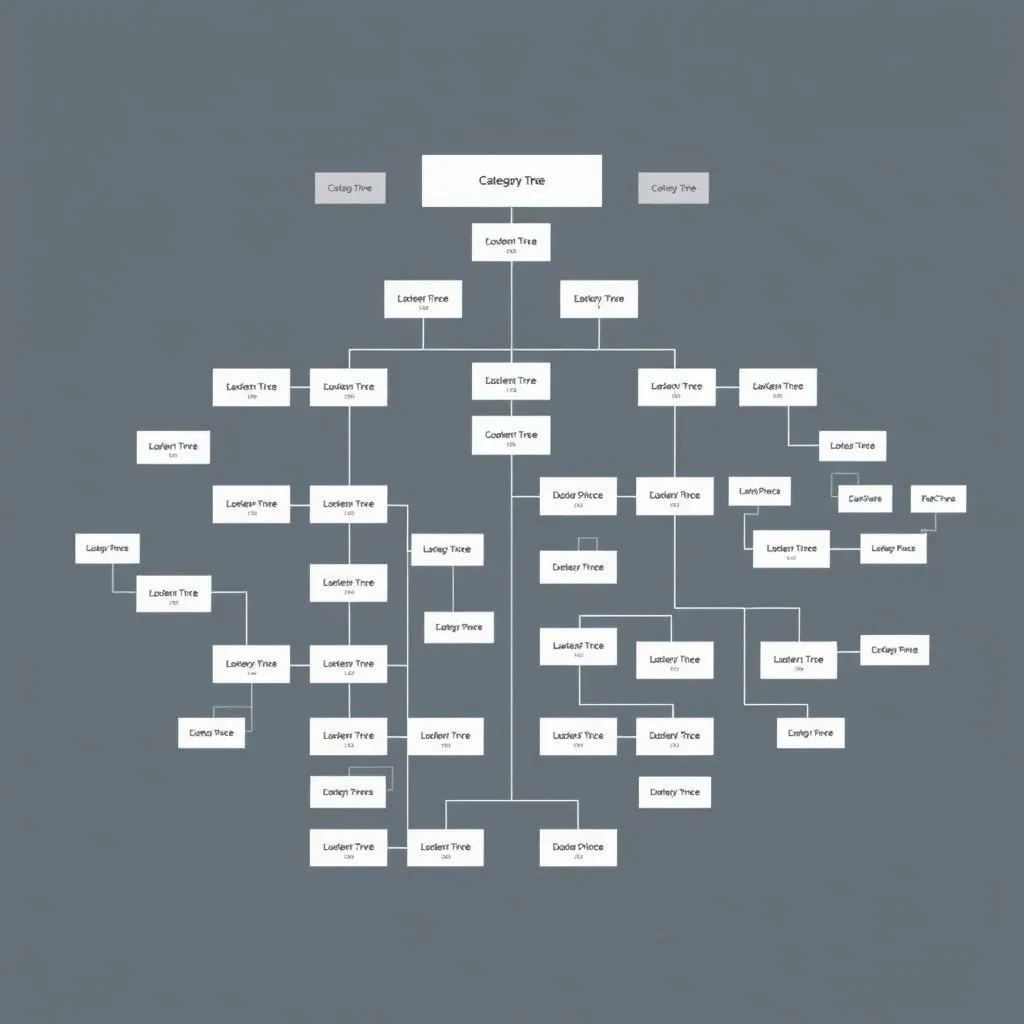
How to make each category page genuinely different
A scalable category page is “unique” when it helps a user complete a distinct task better than nearby pages. If two pages show almost the same products and the same explanation, search engines will treat them as near-duplicates even if the URLs differ. So the goal is to create uniqueness through structure and data, not through longer prose.
One reliable approach is to build uniqueness from three layers: selection, explanation, and navigation. Selection answers “what’s included,” explanation answers “how to choose,” and navigation answers “where next.” If you improve all three, the page becomes self-contained instead of a thin listing.
Unique modules that scale across categories
Modules are reusable content blocks that adapt to a category’s real inventory. They scale because they are generated from structured data, and they remain defensible because they reflect observable reality. Here are modules that usually work well in marketplaces.
- Inventory snapshot: brands count, price range, delivery windows, availability by condition or size.
- Buying constraints: 3–5 “must-check” criteria that prevent wrong purchases (fit, compatibility, warranty, return rules).
- Decision paths: “If you care about X, filter by Y” rules derived from attributes users actually use.
- Top picks logic: highlight items by explicit criteria (best rated, fastest shipping, highest margin of safety) without pretending it’s editorial judgment.
- Comparison cues: explain trade-offs (durability vs weight, price vs support) using attribute ranges.
- FAQ block: questions pulled from onsite search logs and support tickets, not generic SEO prompts.
Intent separation that prevents duplicate clusters
Many marketplaces accidentally merge different intents into one template, then try to fix it with more copy. Instead, separate pages by task, not by parameter. A clean split might be “browse all,” “compare top options,” and “learn how to choose,” each with distinct layout and internal linking.
If you use AI (Artificial Intelligence – systems that generate or transform content) to draft category explanations, you still need strong guardrails to avoid scaled repetition. A useful reference point is how search engines discuss AI content in SEO when it’s used to produce large volumes of similar pages. The safest pattern is to generate from structured inputs and then enforce a uniqueness test per category type.

Canonicalization, facets, and pagination without confusion
Most duplicate content in marketplaces is technical, not editorial. It comes from faceted navigation (filters that create many combinations), sort orders, and pagination that multiplies URLs. Your job is to decide which variants deserve indexing, then make the signals consistent.
URL (Uniform Resource Locator – a web address) rules should be simple enough that anyone can predict the outcome. When rules are unclear, teams create exceptions, and exceptions create indexable duplicates. Aim for a small set of indexable patterns and treat everything else as a functional view for users.
- Pick one canonical per category and ensure internal links point to that preferred URL, not to random filtered states.
- For “sort by” and tracking parameters, default to non-indexable behavior and avoid creating new index targets.
- For pagination, keep it crawlable for discovery, but avoid turning every page into a standalone SEO target unless it serves a separate intent.
- For facets, whitelist only those that represent a real category people search for, not arbitrary combinations that explode URL count.
- Use consistent signals (canonicals, internal links, sitemaps) so you’re not telling search engines three different truths.
A common mistake is to canonical every filtered page to the root category while still linking heavily to filtered URLs across the site. That creates mixed signals and can lead to search engines choosing different canonicals than you expect. If a filtered page is truly valuable, treat it as a first-class page with unique modules and clear linking, not as a hidden variant.
Avoid these duplication traps at scale
Duplicate content is rarely one “big bug.” It is usually six small choices that compound as the marketplace grows. These traps are worth watching because they look harmless in isolation but create systemic duplication.
- Template-only intros that repeat across thousands of categories with only the keyword swapped.
- Facet explosion where every attribute combination produces an indexable URL.
- Sort variants indexed so “price low to high” competes with “best match” for the same query.
- Thin near-clones like “new,” “used,” and “refurbished” pages that show almost the same inventory and guidance.
- Empty or weak pages that become indexable during inventory dips, creating low-value duplicates over time.
- Inconsistent internal links where navigation, breadcrumbs, and widgets point to different URL versions for the same category.
- City or region pages generated without meaningful local signals, creating doorway-like duplicates.
- Copy-pasted FAQs that do not reflect category-specific constraints or user questions.
The fastest way to reduce risk is to treat “indexable” as a quality label you earn, not a default state. If a page fails your uniqueness bar, keep it accessible for users but remove signals that invite search engines to treat it as a primary result. That mindset prevents silent duplication when new features ship.
Scenario rules: what changes by marketplace model
Scaling category pages is not one-size-fits-all, because marketplaces differ by inventory stability and intent diversity. The easiest way to keep decisions consistent is to write scenario rules in “If…, then…” form and apply them repeatedly. This avoids teams inventing new logic every time a feature creates a new URL.
Broad inventory with heavy filtering
If users regularly search for a facet as a standalone concept, then whitelist that facet URL as indexable and add category-specific modules to justify it. If a facet combination is mostly navigational, then keep it non-indexable and consolidate signals to the core category. If inventory changes fast, then use data-driven summaries instead of long static intros to avoid stale near-duplicates.
Local or service marketplaces
If location pages have real local supply and constraints, then build unique local signals (availability, response times, rules) and keep them indexable. If locations are thin, then avoid mass-generating city pages and focus on fewer pages with strong coverage. If categories vary by regulation or policy, then surface those differences as a module so pages aren’t just same-list different-city.
Multi-language or multi-region platforms
If the content is truly localized, then create distinct category narratives and internal linking per locale, not just translated text. If the only difference is currency or shipping, then consider consolidating and avoid duplicating categories across regions without local intent. If you must launch fast, then start with fewer indexable categories per locale and expand only when you can maintain quality parity.
Measurement and quality gates that prevent regression
You cannot “fix duplicates once” in a marketplace, because templates, filters, and inventory will keep changing. Instead, treat duplicate control as an ongoing quality gate, like performance budgets or error monitoring. The goal is to catch duplicate drift before it spreads across thousands of URLs.
A strong monitoring routine combines three checks: index coverage, canonical consistency, and content similarity. Index coverage tells you what is getting indexed, canonical consistency tells you what you’re signaling as primary, and similarity tells you where pages look the same. Run these checks on a schedule and after any major navigation change.
For audits, you don’t need a huge paid stack to get started. A solid baseline is to build an internal workflow around a Free SEO tools checklist and standardize what reports the team reviews each month. What matters most is consistency: the same crawl settings, the same thresholds, and the same escalation path when duplication spikes.
- Index sampling: track which category URLs appear in “site:” spot checks and in Search Console coverage reports.
- Canonical audits: flag pages where declared canonicals conflict with internal link targets.
- Similarity thresholds: alert when two indexable categories share too much boilerplate and too little data-driven uniqueness.
- Inventory gates: keep pages non-indexable when listings drop below your minimum, then re-enable when they recover.
- Release checklist: before shipping new facets, require a written decision on indexability, canonicals, and internal linking.
Official guidelines and trusted sources
If you want one reference page to align your technical signals with how Google handles deduplication, use a canonicalization guide that explains duplicate URL consolidation. Keep it as a shared standard so teams don’t reinvent rules across product lines. This is especially useful when debating whether a variant should be canonicalized, redirected, or kept indexable.
Your first step should be simple and measurable. Pick one high-traffic category and map its URL variants, then decide which variants are truly indexable and which should consolidate to a single canonical. Once that pattern works, repeat it category-type by category-type, using the same blueprint and quality gate.
About the author
Alex Carter
PressBay contributor covering marketing and monetization tactics for indie publishers.
Related
Related articles

Marketplace SEO Checklist for Multi-Vendor Sites: Technical and On-Page Essentials
A multi-vendor marketplace wins in SEO (Search Engine Optimization – improving visibility in unpaid search results) when it controls crawl and indexation across filters, search pages, and vendor stores, while still publishing unique, intent-matched pages users actually want. The…

Backlink Marketplaces and SEO Safety: Risks, Red Flags, and Better Alternatives
Backlink marketplaces are not automatically unsafe for SEO (Search Engine Optimization – improving a site’s visibility in search engines), but they are rarely “safe by default.” The risk comes from intent and patterns: buying placements to manipulate rankings, at scale, leaves f…
More from the author
How to Monetize an Unused Domain Beyond Parking
10 min readTurn an unused domain into a focused revenue asset by matching it to a real buyer intent: leads, subscriptions, sales, or sponsorship. The best methods are lead-capture landing pages, a niche content hub with monetized offers, or a small productized service built around one prob…
Seven Real-World Content Marketing Strategy Plans You Can Adapt
10 min readA usable content marketing strategy is a plan that turns one audience promise into repeatable assets and consistent distribution. It works when every piece has a job to do in your funnel, not when you “post regularly”. The fastest path is to copy a proven structure, set one prim…
B2B Content Marketing Strategy: A 90-Day Roadmap for Traffic, Leads, and Sales
10 min readA B2B (Business-to-Business) content marketing strategy wins when you run content like a repeatable system, not a series of posts. In 90 days, you can build a measurable pipeline by pairing focused topics with conversion assets and a disciplined promotion cadence. The key is to…
Domain Rating vs Domain Authority: Differences, Use Cases, Common Myths
9 min readDomain Rating (DR) and Domain Authority (DA) are third-party authority metrics designed to estimate the relative strength of a domain’s backlink profile. They can help you compare sites for outreach and reporting, but they are not ranking factors used by Google or other search e…
Previous article