Blog
AI Content in SEO 2026: How Google, Bing and AI Search Treat It
Table of contents
AI-assisted content can appear in Google Search, Bing, Copilot and other answer experiences in 2026, but there is no ranking advantage simply because a page was written with or without AI. The practical dividing line is still usefulness: does the page answer a real question, add evidence or experience, remain accurate, and give the reader a reason to trust it? Google says its AI Overviews and AI Mode use the same fundamental SEO requirements as traditional Search, while Bing evaluates content across its search and Copilot experiences through its webmaster quality and anti-spam systems. This guide replaces the old 2025 ranking with a current comparison and a workflow for publishing AI-assisted content without treating an AI tool as a substitute for editorial judgment.
The short answer: AI is a production method, not a quality signal
Search engines do not need a page to be typed manually from the first sentence. They do need the finished page to be accurate, relevant, accessible and useful to people. Google’s current guidance says generative AI can help with research and structure, but generating many pages without adding value may fall under scaled content abuse. The same principle applies when the output is translated, lightly rewritten, assembled from feeds or produced by a human using a repetitive template.
That makes the usual question — “Does Google penalize AI content?” — too broad to be useful. A better audit asks what the page contributes beyond the material already available, whether its claims have been checked, whether the author can explain the method, and whether the site is publishing it for readers rather than merely to occupy more search results.
- Google: focus on people-first content, technical eligibility and compliance with spam policies; AI Overviews and AI Mode do not require a special AI markup.
- Bing and Copilot: maintain crawlable, clear and original pages, then use webmaster data to see when URLs are cited in AI answers.
- Other AI search surfaces: treat them as variable retrieval systems, not as a separate channel that can be manipulated with one universal “GEO” trick.
- Every engine: use AI to accelerate research or drafting, but reserve fact-checking, source selection, examples and final claims for an accountable editor.
How Google treats AI-assisted content in 2026
Google’s official position is not a blanket ban on generative AI. Its policy focuses on the purpose and result of the content. Large volumes of unoriginal pages created mainly to manipulate rankings can be scaled content abuse regardless of whether the text was generated by AI, copied from feeds, translated automatically or produced by a human following a formula.
That distinction matters for publishers. A single AI-assisted guide that contains a clear point of view, verified facts, original examples and useful visuals is a different editorial product from hundreds of near-identical pages whose only change is a city name or keyword. The amount of automation is not a safe substitute for judging the value of the final page.
Google also distinguishes site reputation abuse from ordinary third-party publishing. A guest article or freelance contribution is not automatically a violation. The risk appears when third-party pages are hosted mainly to exploit the established ranking signals of the host site. A publisher should therefore judge every contributed or AI-assisted page by audience fit, editorial quality, transparency and genuine usefulness — not only by whether it contains a backlink.
AI Overviews and AI Mode: what changes for publishers
Google’s AI Overviews and AI Mode are not separate search engines with a secret set of mandatory optimizations. Google says that a page must be indexed and eligible to appear with a snippet in ordinary Search to be eligible as a supporting link in these AI features. Existing fundamentals continue to matter: allow crawling, make important information available as text, use internal links, maintain a usable page experience and keep structured data consistent with the visible content.
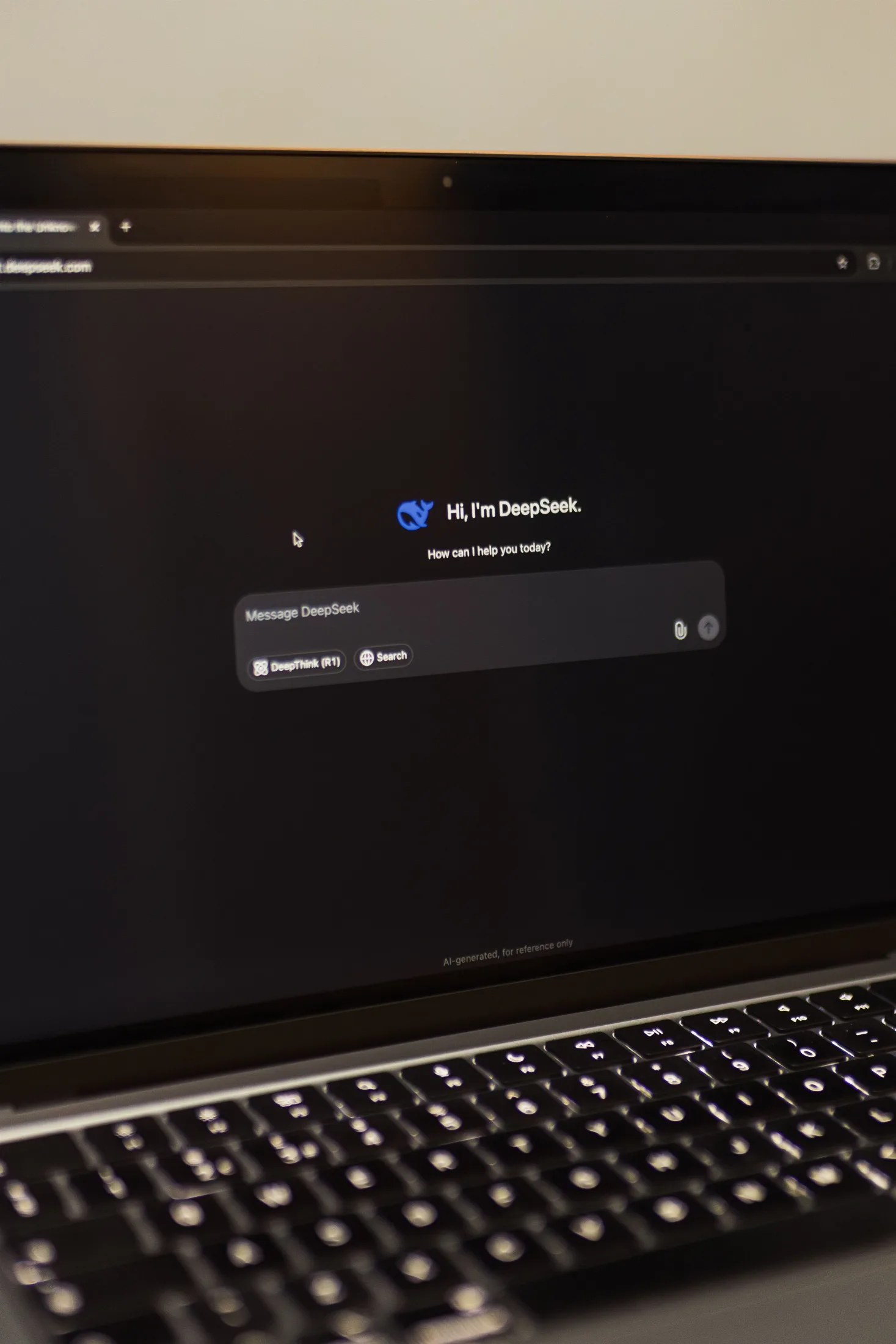
AI Overviews are designed to give a quick explanation for queries where an overview adds value, while AI Mode is intended for more exploratory questions, reasoning and comparisons. Both can use query fan-out: the system may issue related searches across subtopics before assembling an answer. For a publisher, the useful response is not to create a page for every imagined fan-out query. It is to build a well-focused resource that covers the underlying problem clearly enough to be retrieved for several legitimate formulations.
Google also states that there is no special schema.org markup, machine-readable AI file or mandatory “chunking” format that guarantees inclusion in AI features. Short sections and descriptive headings can improve usability, but breaking a page into artificial fragments solely for an AI system is not a ranking strategy. A clear page written for the reader remains the better default.
How Bing and Copilot evaluate AI-assisted pages
Bing’s webmaster guidance covers both conventional Bing Search and newer experiences such as Copilot. The practical requirements are familiar: a page should be crawlable, understandable, original enough to deserve inclusion, and free from manipulative practices such as keyword stuffing, cloaking, scraped text or link schemes. Bing does not turn the use of an AI writing tool into a quality guarantee. Thin or misleading automation can still be filtered even when the prose looks fluent.
The most important 2026 change for measurement is Bing Webmaster Tools’ AI Performance report, introduced in public preview in February 2026. It shows how often site URLs are cited in supported AI-generated answers, which pages are referenced, and which grounding queries are associated with those citations. The numbers describe citation activity; they do not mean that a page has a traditional ranking position or that a citation proves authority.
That distinction should change the reporting language used by SEO teams. “The page received 18 AI citations” is a measurable statement if the tool reports it. “The page ranked first in AI search” is usually an unsupported simplification because answers, sources and presentation can vary by query, country, device and product.
A practical comparison of search and AI answer surfaces
Instead of ranking engines from “most friendly” to “least friendly”, compare the decisions a publisher must make:
- Policy risk: Google documents scaled content abuse and site reputation abuse in detail; Bing also expects original, non-manipulative content across its search experiences. Neither policy makes AI assistance itself the decisive factor.
- Retrieval opportunity: Google can show supporting links through AI Overviews and AI Mode; Bing can use pages in Copilot and other supported AI answers. Eligibility depends on ordinary discoverability and quality, not on a magic prompt or file.
- What earns trust: concrete evidence, transparent methodology, accurate dates, relevant examples and a clear author or editorial process are more defensible than generic claims about “AI optimized” text.
- What to measure: combine impressions, clicks and conversions from ordinary analytics with Google’s generative AI reporting when available and Bing’s AI Performance citations. Each measurement describes a different part of the journey.
For a wider link-building context, the 2026 guide to earning sustainable editorial links explains why topical fit, editorial substance and transparent placement matter more than a superficial promise that one link will “move rankings”. The same logic applies when an AI system chooses which pages to cite.
What a responsible AI-assisted workflow looks like
A reliable workflow has explicit hand-offs rather than one prompt followed by publication. Start by defining the reader’s question and the decision the page should help them make. Gather primary documentation and current examples before asking an AI system to outline the material. Keep a source list while researching so that every important number, product feature and policy statement can be checked against its origin.
- Set the editorial brief. Write the audience, search intent, date range, market, required evidence and exclusions before drafting.
- Research from primary sources. Use official documentation for search policies and product features, then add specialist analysis only where it provides interpretation or a practical example.
- Use AI for bounded tasks. Ask it to group questions, identify gaps, propose alternative explanations or turn verified notes into a draft. Do not ask it to invent studies, quotes, tests or first-hand experience.
- Fact-check the output. Re-open sources, verify dates and product names, remove claims that cannot be supported, and mark uncertainty where evidence conflicts.
- Add original value. Include a decision rule, worked example, methodology, screenshot, dataset, checklist or experience that the reader cannot get from a generic summary.
- Run an editorial and technical review. Check the lead, headings, internal links, images, accessibility, metadata, structured data and whether the page is genuinely distinct from existing articles.
- Measure after publication. Track the page’s ordinary search performance, referral and conversion behaviour, then review AI citation or generative-feature data where the relevant tool provides it.
A repeatable content system should record who checked the final page and what evidence was used. The content marketing strategy template is useful for turning that workflow into ownership, review cadence and measurable KPIs rather than an improvised publishing habit.
Disclosures, images and structured data
Google recommends giving readers context about how content was created when that information would reasonably matter to them. That does not mean placing a conspicuous “AI-generated” label on every paragraph. It means being transparent when automation materially affects the nature of the page, and never presenting an AI-generated opinion, image, test or quote as a human experience that did not happen.

Images should support the explanation rather than decorate an otherwise generic article. A screenshot, diagram or relevant photograph can help a reader understand the topic, but it does not compensate for weak text. Alt text should describe the visible image accurately, and structured data should match what the page actually shows. There is no special AI schema that replaces those basics.
How to audit an AI article before and after publication
Before publishing, ask five questions: What does this page add? Which claims are time-sensitive? Can every important statement be traced to a source? Does the article contain a concrete example or decision process? Would the page still be useful if the AI-related keyword were removed from the title?
After publication, compare the page with its own baseline instead of chasing a single ranking screenshot. Check whether it is indexed, whether queries match the intended topic, whether users reach the next useful page, and whether the content remains accurate after product or policy changes. For a more general diagnostic, the backlink audit workflow shows the same principle in another area of SEO: collect evidence first, classify the problem, then choose the smallest justified intervention.
The 2026 takeaway
AI-assisted content can perform in search when it is edited into a useful, trustworthy resource. Google’s AI Overviews and AI Mode still rely on ordinary Search eligibility and SEO fundamentals; Bing and Copilot reward pages that are crawlable, clear and valuable enough to retrieve; and the newest webmaster reports make citations more measurable without turning them into predictable search positions.
Use AI to reduce repetitive work, not to remove responsibility. The safest publishing decision is usually simple: keep a page when it answers a real need with evidence and a distinct contribution; rewrite it when the research is sound but the explanation is generic; and do not publish it when its only purpose is to create another URL around a keyword.
Sources
- Google Search guidance on using generative AI content
- Google Search spam policies: scaled content abuse and site reputation abuse
- Google Search documentation on AI Overviews, AI Mode and website eligibility
- Google Search Central announcement of generative AI performance reports
- Bing Webmaster Guidelines
- Bing Webmaster Tools AI Performance public preview
- Pexels image: interactive AI interface on a laptop, Matheus Bertelli, free to use
- Pexels image: tablet with search and analytics workspace, Pixabay, CC0
About the author
Jamie Brooks
PressBay writer focused on growth loops and SEO for domain-driven media.
Related
Related articles

Seven Real-World Content Marketing Strategy Plans You Can Adapt
A usable content marketing strategy is a plan that turns one audience promise into repeatable assets and consistent distribution. It works when every piece has a job to do in your funnel, not when you “post regularly”. The fastest path is to copy a proven structure, set one prim…

B2B Content Marketing Strategy: A 90-Day Roadmap for Traffic, Leads, and Sales
A B2B (Business-to-Business) content marketing strategy wins when you run content like a repeatable system, not a series of posts. In 90 days, you can build a measurable pipeline by pairing focused topics with conversion assets and a disciplined promotion cadence. The key is to…

Content Marketing Strategy Template: A Step-by-Step Plan With a KPI Checklist
A usable content marketing strategy template is a repeatable operating system for turning audience needs into publishable assets and measurable outcomes. It defines what you will publish, who it is for, how it will be distributed, and how success will be tracked week to week. If…

Content Marketing Strategy for SaaS: A Practical Funnel Map, Topic Engine, and Publishing Cadence
A SaaS (Software as a Service – subscription software delivered online) content marketing strategy is a written system that connects funnel stages to specific content types, with clear distribution and measurement. You map what each stage must achieve (awareness, evaluation, act…
More from the author
Sponsored Post Offers for Publishers: A Review Checklist for Topics, Links, and Sources
7 min readA practical pre-acceptance checklist for reviewing sponsored-post enquiries: advertiser identity, reader benefit, topic fit, sources, destination pages, disclosure, and link attributes.
Media Kit for Blogs: What to Include Before Pitching Sponsored Content
7 min readA publisher-focused checklist for turning blog data, audience information, formats, rates, and editorial rules into a useful Media Kit for sponsored-content enquiries.
Domain Flipping for Beginners: How to Buy, Monetize, and Sell Domains
11 min readDomain flipping works when you buy below value based on evidence, not vibes. You improve the asset by adding real utility or revenue, then sell with clear proof that reduces a buyer’s risk. The fastest path is a repeatable workflow: clean history, believable demand, and a simple…
Digital PR Outreach Follow-Ups: Timing, Scripts, and Stop Rules
8 min readFollow up when you can add one new reason to reply, not when you feel anxious about silence. A safe default is two follow-ups over 7–12 business days, adjusting for how time-sensitive the pitch is. Write short, specific messages that make the next step obvious, and stop once con…

Previous article
Link Building in 2026: How to Earn Risk‑Free Links that Actually Move Rankings

Next article