Blog
Content Marketing Strategy Template: A Step-by-Step Plan With a KPI Checklist
Table of contents
A usable content marketing strategy template is a repeatable operating system for turning audience needs into publishable assets and measurable outcomes. It defines what you will publish, who it is for, how it will be distributed, and how success will be tracked week to week. If you can’t explain your plan in a few steps and tie it to a handful of KPIs (Key Performance Indicators), you don’t have a strategy yet.
- Start with one clear business outcome, then translate it into measurable leading indicators.
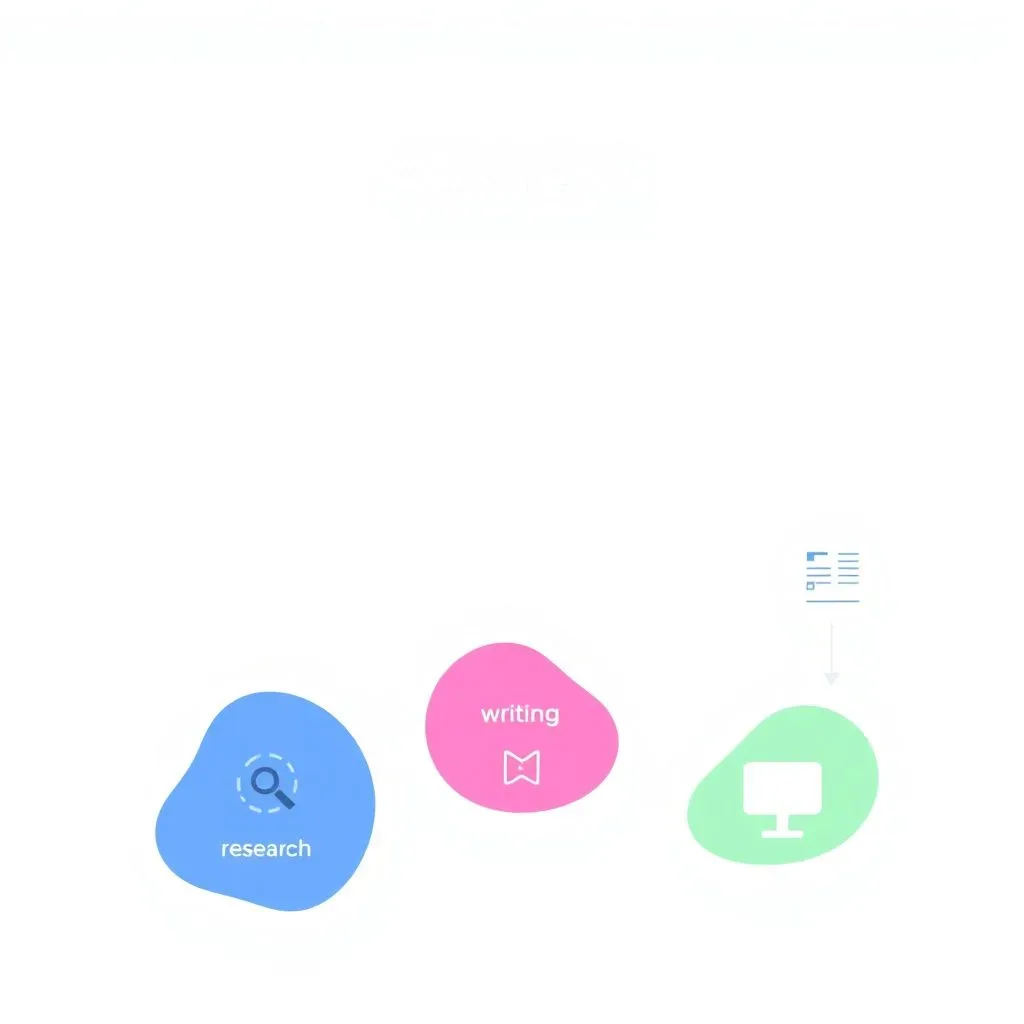
- Build a small “content supply chain” (research → brief → draft → edit → publish → distribute).
- Treat distribution as a first-class deliverable, not an afterthought.
- Review a simple KPI dashboard weekly, and make one focused change per cycle.
Foundation inputs you must define before you write a plan
Your strategy should begin with constraints and clarity, not a content calendar. Define the audience segment, the problem you solve, and the specific action you want readers to take. Use the same language your audience uses, then keep it consistent in titles, headers, and calls to action.
If you need a quick reference framework for organizing themes and editorial focus, the Content Marketing Strategy category is a useful way to see how topics can be grouped without forcing one-size-fits-all templates. A strategy becomes actionable when it includes clear ownership and realistic capacity (people, time, budget, approvals). If your capacity is two posts per month, build a system that wins with two posts per month.
Input checklist (do this once, then revisit quarterly)
- Define ICP (Ideal Customer Profile) and one primary segment. Write down one sentence describing their main “job to be done.”
- Choose one core offer and one primary conversion action. Make sure every piece of content can connect to that action naturally.
- List your top three differentiators. Turn each differentiator into a claim you can prove with examples, data, or demonstrations.
- Decide your content formats. Pick 2–3 formats you can sustain (guides, comparisons, case studies, checklists, interviews).
- Set quality standards. Require original angle, clear structure, and a point of view that goes beyond summarizing competitors.

The step-by-step plan you can run as a weekly system
This plan works best when you treat content like a production workflow with “definition of done” criteria at each step. Each step below is designed to prevent random publishing and replace it with predictable output and measurable learning. You do not need more steps, you need cleaner handoffs between them.
Step 1: Choose one outcome and one funnel path
Pick one business outcome (pipeline, trials, purchases, leads, retention) and map the shortest path to it. Then choose 2–3 leading indicators that you can influence weekly (qualified traffic, email sign-ups, product page clicks, demo requests). If you try to optimize every stage at once, you will optimize none.
Step 2: Build a topic system, not a list of ideas
Create 3–6 topic clusters that directly match your audience’s problems and your product’s value. For each cluster, define “pillar” pages (deep guides) and “support” pages (FAQs, comparisons, how-tos). This keeps you from publishing disconnected posts that never reinforce each other.
Step 3: Write a brief that makes the draft easy
A good brief is a contract between strategy and execution. It should include search intent, audience stage, key points, proof assets, and a single primary call to action. Add 3–5 “must answer” questions so the piece can’t drift into vague commentary.
Step 4: Produce in batches to reduce context switching
Batch research on one day, briefs on another, drafts on another. Batching protects focus and makes quality easier to maintain. If you can only write one draft per week, batch everything else around that constraint.
Step 5: Edit for clarity, trust, and structure
Editing is where performance is created. Tighten introductions, remove filler, and make sure each section has one job. Add examples, screenshots, mini case studies, or concrete steps so the content earns trust.
Step 6: Publish with on-page SEO (Search Engine Optimization) basics
Use a descriptive title, clean headings, and internal links to related pages. Make the first screen deliver the answer quickly, then expand with supporting detail. Avoid keyword stuffing and focus on readability and completeness.
Step 7: Distribute with a defined playbook
Distribution should be written into the plan as an output, not a hope. Assign a person, a channel list, and a timeline for the first 72 hours after publishing. If the piece is strategic, plan a second distribution wave 2–4 weeks later.
Step 8: Review, learn, and iterate weekly
Set one weekly review meeting (even if it’s just you). Look at a small KPI set, identify one bottleneck, and choose one experiment for the next cycle. This is how content becomes a compounding system rather than a publishing habit.
Definition of done checklist (use this before you hit publish)
- The page answers the main question in the first 5–8 lines and includes a clear takeaway.
- Headings follow a logical sequence and the reader can scan the page in under one minute.
- There is one primary call to action and it matches the reader’s stage.
- The content includes at least one unique proof element (example, data point, walkthrough, or original insight).
- Distribution steps and owners are assigned before publishing, not after.
KPI checklist and a simple reporting cadence
KPIs are useful only when they change decisions. Choose a small set that maps to your funnel, then review it on a schedule you can sustain. If you need lightweight tooling ideas for tracking and diagnostics, 50 Free SEO Tools is a practical starting point for assembling a basic measurement stack.
Core KPI checklist (pick what matches your outcome)
- Reach KPIs: organic impressions, clicks, referral traffic, newsletter growth. Use these to validate whether distribution and topic selection are working.
- Engagement KPIs: average engaged time, scroll depth, returning visitors, email replies. Treat engagement as a signal of content-market fit, not vanity.
- Conversion KPIs: demo requests, trial starts, add-to-cart rate, lead quality score. Track conversion rate per page and not only total conversions.
- Content operations KPIs: publish frequency, cycle time (brief to publish), revision rate. These indicate whether your system is stable enough to scale.
- SEO health KPIs: indexed pages, internal link coverage, top queries per cluster. Use this to find clusters that need better internal structure.
A cadence that prevents “dashboard theater”
- Weekly (30 minutes): review 5–8 KPIs, pick one bottleneck, define one experiment.
- Monthly (60 minutes): review top-performing and underperforming pages, update briefs, refresh internal links.
- Quarterly (90 minutes): revisit clusters, revalidate ICP, prune content that no longer matches the audience or offer.
Common pitfalls and how to avoid them
Most content strategies fail because execution drifts away from intent. The fixes below are simple, but they require discipline and a willingness to say no. Treat these as guardrails that protect quality and consistency.
- Pitfall: Publishing without a conversion path. Fix: add one clear next step per page and match it to the reader’s stage.
- Pitfall: Measuring only traffic. Fix: track one action KPI (sign-up, request, purchase) and one leading indicator KPI (qualified clicks, product-page visits).
- Pitfall: Chasing volume with thin pages. Fix: require an original angle and one proof element per piece, even if it reduces output.
- Pitfall: Distribution as “we’ll share it on social.” Fix: create a playbook with channels, timing, and a second wave, then assign ownership.
- Pitfall: Topic drift caused by brainstorming addiction. Fix: lock 3–6 clusters and only publish inside them until you see clear performance patterns.
- Pitfall: Over-automating content without editorial oversight. Fix: keep human review, fact-checking, and structure standards, especially for SEO-driven pages.
- Pitfall: Internal competition between similar posts. Fix: merge overlaps, strengthen one pillar, and redirect or refocus duplicates.
- Pitfall: Inconsistent voice and claims across the site. Fix: maintain a simple messaging doc with approved phrasing and evidence for key claims.
Three ready-to-run scenarios you can adapt in minutes
If your team is small, the fastest win is choosing a scenario and executing it for one full cycle before changing anything. If you are using AI-assisted drafting, keep it aligned with search engine expectations and quality standards, and use guidance like AI Content in SEO as a reminder that automation helps most when it supports usefulness rather than scaling sameness. Each scenario below includes a simple “if… then…” decision rule so you can stay focused.
Scenario 1: B2B SaaS with a long sales cycle
If your sales cycle is longer than 30 days, then prioritize problem-aware and solution-aware content over product announcements. If a post earns consistent qualified clicks but low conversions, then add a mid-funnel offer (webinar, checklist, diagnostic) before asking for a demo. If you can only publish twice per month, then make one pillar guide and one supporting comparison that links back to it.
- Build 3 pillars around the top pains your best customers mention in sales calls.
- Publish one case study per quarter that shows implementation steps and constraints.
- Measure: qualified traffic, demo requests, and assisted conversions (how often content appears in journeys).
Scenario 2: E-commerce with many products
If you have a large catalog, then focus content on buying decisions and use cases, not generic “top lists.” If a category page ranks but doesn’t convert, then improve filtering, add FAQs, and connect the content to the shopping path. If seasonal demand drives revenue, then publish seasonal hubs early and refresh them rather than creating new pages each season.
- Create “how to choose” guides for your top three product categories.
- Publish comparison pages that explain trade-offs with clear recommendations by use case.
- Measure: category-page clicks, add-to-cart rate, and revenue per landing page.
Scenario 3: Agency or service business that needs leads
If you sell expertise, then your best content is proof of process, not broad opinions. If you get leads but they are low quality, then tighten your positioning and add qualifying steps (pricing ranges, fit criteria, required timeline). If your team is busy, then reuse one strong case study as multiple assets across channels.
- Publish “process” pages that show how you work and what outcomes are realistic.
- Turn proposals into anonymized lessons and checklists.
- Measure: lead quality, reply rate, and consultations booked from content-assisted paths.
Your first step is to write the one-sentence business outcome, pick 3–6 topic clusters, and run the workflow for two weeks without adding extra complexity. After that, review the KPI checklist, find the biggest bottleneck, and adjust one part of the system at a time.
About the author
Jamie Brooks
PressBay writer focused on growth loops and SEO for domain-driven media.
Related
Related articles

Content Marketing Strategy for SaaS: A Practical Funnel Map, Topic Engine, and Publishing Cadence
A SaaS (Software as a Service – subscription software delivered online) content marketing strategy is a written system that connects funnel stages to specific content types, with clear distribution and measurement. You map what each stage must achieve (awareness, evaluation, act…
AI Content in SEO: 2025 Ranking of Search Engines by How They Treat It
AI-generated articles, product pages and landing pages are now everywhere. Many marketers still worry that using AI content in SEO will automatically trigger penalties in Google, Bing or other search engines. In reality, each engine has its own balance between encouraging innova…
More from the author
Digital PR Outreach for Backlinks: What Actually Earns Links (Data, Assets, Angles)
10 min readDigital PR (Public Relations – earned media outreach) earns backlinks when you offer publishable evidence and a ready-to-use asset that makes a writer’s job easier. Links appear as a byproduct of credible coverage, not as a negotiated “placement,” so the winning pitches are buil…
Broken Link Building: A Step-by-Step Workflow and Outreach Script
12 min readBroken link building works by finding dead outbound links on real pages and offering a better replacement that helps the reader. You earn links by doing genuine maintenance: you fix a problem, and the editor swaps the broken URL (Uniform Resource Locator – the web address) for y…
How to Build a Media List for Digital PR Outreach (Tools, Filters, and Process)
9 min readA strong media list for Digital PR (Digital Public Relations) outreach is a curated outreach database built around relevance, not volume. It combines editorial-fit outlets, the right contact roles, and proof that each target actually covers topics like yours. When done right, it…
Content Marketing Strategy for SaaS: A Practical Funnel Map, Topic Engine, and Publishing Cadence
11 min readA SaaS (Software as a Service – subscription software delivered online) content marketing strategy is a written system that connects funnel stages to specific content types, with clear distribution and measurement. You map what each stage must achieve (awareness, evaluation, act…
Previous article